
About Us
AutoIQ was created to support the daily decisions mechanics face in a world of increasingly complex vehicles. Modern cars generate more data than ever before, yet the information needed to diagnose them is often fragmented, locked behind systems, or difficult to interpret in practice.
Our Purpose
AutoIQ exists to help mechanics make confident decisions — faster, more consistently, and with better insight.
We don’t aim to replace experience or craftsmanship. Instead, AutoIQ acts as a practical layer of decision support, helping workshops connect fault codes, symptoms, and known patterns into a clearer next step.
“AutoIQ has become part of our daily workflow. It saves time on difficult cases and helps us avoid unnecessary trial-and-error”
— Service Manager, Independent Garage
Designed For Everyday Use
AutoIQ is intentionally simple – There are no new tools to learn, no complex installations, and no changes to your existing workflow.
You use your current diagnostic equipment. AutoIQ helps you interpret the results.
Whether you are a one-person garage or a growing workshop with multiple technicians, AutoIQ adapts to how you already work.
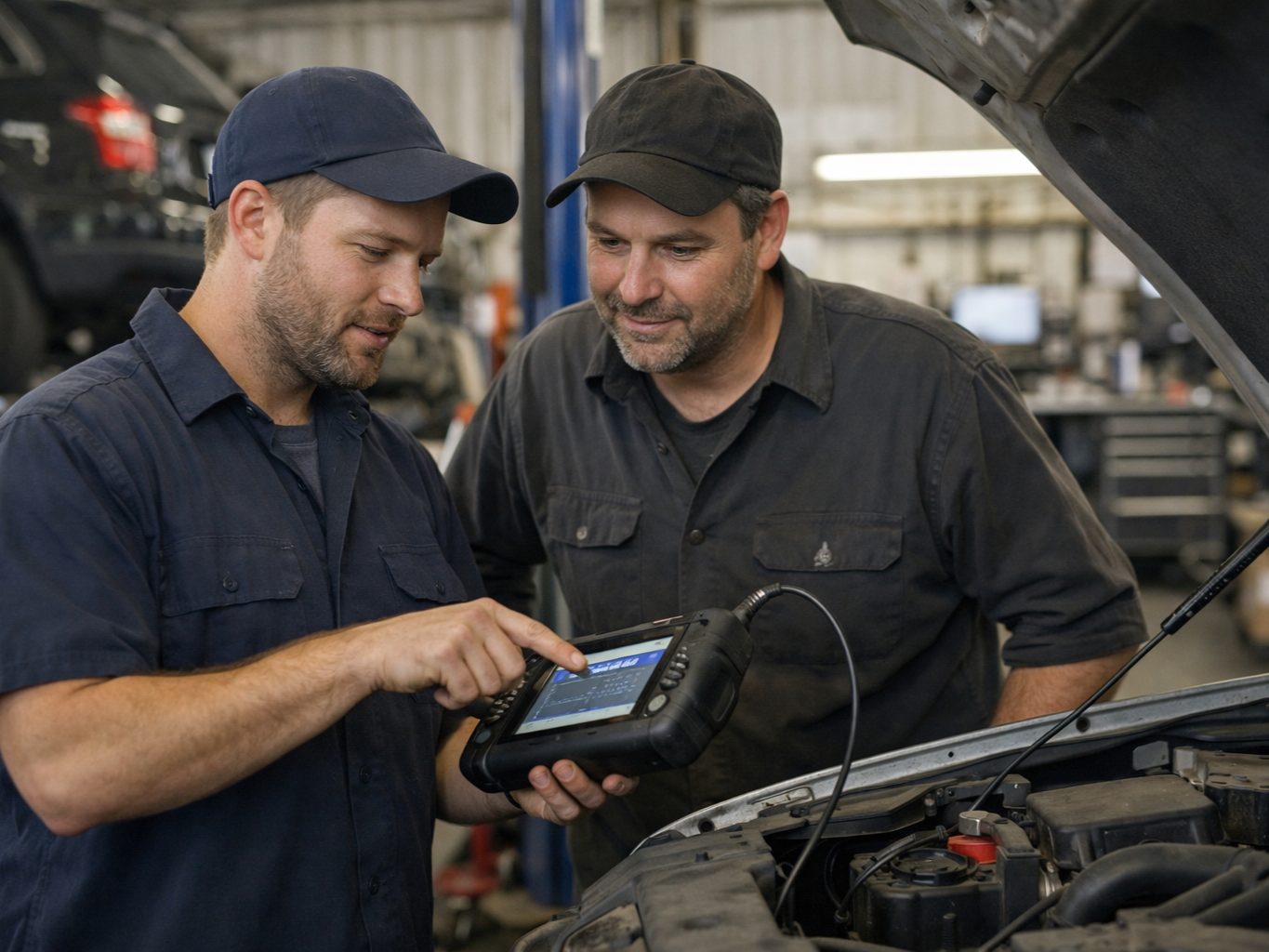
Working With Workshops, Not Just For Them
AutoIQ is intentionally simple – There are no new tools to learn, no complex installations, and no changes to your existing workflow.
You use your current diagnostic equipment. AutoIQ helps you interpret the results.
Whether you are a one-person garage or a growing workshop with multiple technicians, AutoIQ adapts to how you already work.

Frequently Asked Questions
-
AutoIQ is a diagnostic support platform for professional mechanics. It helps interpret fault codes and symptoms, suggests likely causes, and provides structured repair guidance — all through a simple, conversational interface.
-
AutoIQ is designed for independent workshops, one-person garages, and growing teams that work with modern vehicles and need faster, more reliable diagnostic support.
-
No. AutoIQ works alongside your existing diagnostic tools. You continue using your current tester and simply use AutoIQ to interpret results and guide next steps.
-
You begin by identifying the vehicle using a license plate, VIN, or a simple text description. From there, you provide fault codes or symptoms, and AutoIQ guides the process forward.
-
Yes. If you don’t have a fault code, you can describe the symptoms in plain language. AutoIQ will ask relevant follow-up questions to narrow down the issue.
-
AutoIQ provides likely causes, not absolute conclusions. Diagnoses are prioritised based on vehicle-specific logic, known fault patterns, and the information you provide — similar to how an experienced technician would approach the problem.
-
No. AutoIQ is designed to support professional judgment, not replace it. The platform helps structure information and highlight likely paths forward, while final decisions remain with the mechanic.
-
When requested, AutoIQ generates a professional repair guide that includes:
a technical summary
required parts
access and location notes
step-by-step procedures
safety considerations and tools
-
AutoIQ supports a wide range of makes and models. Vehicle identification ensures guidance is specific to the car you’re working on, not generic advice.
-
AutoIQ reduces the time spent searching for information, comparing sources, and second-guessing decisions.
In internal testing and early workshop use, mechanics typically reach a clear diagnostic direction 60-70% faster compared to manual research across OEM documents, forums, and other platform services.
That time saving comes from:fewer search steps
faster narrowing of likely causes
structured follow-up questions instead of trial-and-error
-
Yes — especially in complex or non-obvious cases.
By connecting fault codes, symptoms, and vehicle-specific patterns, AutoIQ helps eliminate unlikely causes earlier in the process. Workshops using similar structured diagnostic approaches typically see a 20–30% reduction in unnecessary part replacements on difficult jobs.
AutoIQ doesn’t guess — it prioritizes.
-
Both.
Experienced technicians use AutoIQ as a second opinion and structure tool, especially on:
intermittent faults
modern drivetrains
unfamiliar models
Less experienced mechanics benefit from clearer guidance and fewer dead ends, helping raise the overall diagnostic consistency across the workshop.
-
AutoIQ replaces fragmented searching with a focused diagnostic flow.
Instead of:
filtering irrelevant results
guessing which advice applies
scrolling through manuals and manually looking for the answer
opening multiple tabs
AutoIQ delivers vehicle-specific reasoning in one place. Mechanics report spending significantly less time “reading around the problem” and more time acting on it.
-
Yes.
AutoIQ evaluates fault codes together rather than in isolation, helping identify relationships and root causes that are often missed when codes are handled one by one.
This approach is especially valuable on modern vehicles where secondary faults are common.
-
No.
AutoIQ only asks follow-up questions when necessary, and typically no more than 1–3 targeted questions are required to reach a clear direction.
The goal is to reduce time overall, not create extra steps. -
AutoIQ delivers the most value on:
complex or unclear faults
vehicles with multiple fault codes
unfamiliar models or engines
cases where time pressure is high
It also adds value on routine jobs by increasing confidence and consistency.
-
By reducing diagnostic time, avoiding unnecessary parts, and increasing first-time-fix rates, AutoIQ helps workshops:
free up technician hours
reduce rework
improve customer trust
Even modest improvements — such as 20 minutes saved per job — can have a meaningful impact over time.